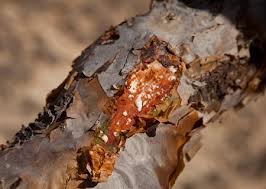
Myrrh
Matthew 2:11
And when they had come into the house,
they saw the young Child with Mary His mother,
and they fell down and worshipped Him.
And when they had opened their treasures,
they presented gifs to Him:
gold, frankincense and myrrh
 Myrrh comes from a small, thorny tree (Commiphora Myrrah) that grows in dry and stony ground. It is a sap,
or resin that is hardened after it oozes from the tree.
Myrrh comes from a small, thorny tree (Commiphora Myrrah) that grows in dry and stony ground. It is a sap,
or resin that is hardened after it oozes from the tree.
Unlike Frankincense, which is sweet, Myrrh has a bitter taste. Myrrh means:
to become bitter. It represents the bitter things of life that we all have to
go through.
 Like Frankincense, the sap comes from wounding and piercing the tree,
which is said to “bleed” or “weep” the resin. All of these things point to the
suffering Jesus endured on our behalf – we even see the suggestion of the crown
of thorns that was placed on His head.
Like Frankincense, the sap comes from wounding and piercing the tree,
which is said to “bleed” or “weep” the resin. All of these things point to the
suffering Jesus endured on our behalf – we even see the suggestion of the crown
of thorns that was placed on His head.
Myrrh was used: a) to embalm the dead because it had the property to
preserve. b) It was also used as a perfume (myrrh has a bitter taste, but a
sweet smell). c) Myrrh was an ingredient in the holy anointing oil mentioned in
Exodus. d) Myrrh has great medicinal uses – it helped with anxiety and
depression. e) Myrrh was a cleansing or purifying agent and antiseptic (Esther
2:12). Today Myrrh is used today in toothpaste, mouthwash and make-up.
From these 5 uses, may I suggest
that myrrh is the fragrance that comes from lives that have followed the
example of Jesus as they walk through suffering, and come through with more of
Him and less of self:
- Christ-like choices in the midst
of suffering bring endurance and preservation to the soul.
- Christ-like choices in the midst
of suffering create a beautiful fragrance on our lives
- Christ-like choices in the midst
of suffering bring a layer of anointing to us that cannot be found in any other
place, or from any other circumstances
- Christ-like choices in the midst
of suffering pave the way for healing to flow in us and through us
- Christ-like choices in the midst
of suffering purifies our lives to the core
Myrrh was offered to the baby Jesus – to prophecy of the suffering and
death He would endure in order to bring redemption to all mankind.
Myrrh represents the Divine
Savior who came in human form.
Jesus is the incarnate God who lived and suffered as a man (“…Man of sorrows
and acquainted with grief Is. 53:3) so that we could be saved. Christ had to
suffer greatly for our sins and for the healing that is freely offered to all.
The sufferings of Christ give us hope in suffering – through it we are
cleansed, purified, healed, anointed and perfumed so that we can become the
perfect Bride of Christ.